Established Education Support Centers and indigenous peoples’ Language Center
ECDO’s education activities originally focused on free Educational Materials Distribution, with the objective of increasing attendance rates and the number of children completing primary level education. However, the output of the program has only achieved a small proportion of its objectives. Monitoring and learning from this program found that free educational materials did not solve the inherent problems in education. One of the main problems was a lack of motivation and literacy of guardians which meant that children were not encouraged to attend school or able to gain help in completing their homework at home. When homework was not completed, they were often subjected to corporal punishment in school. To compound this problem, teaching was delivered in Bangla, which is not the mother tongue for most indigenous children. All of these factors acted as a deterrent for indigenous school children to regularly attend their local primary school. Following this discovery, we implemented a new initiative to remove these problems for indigenous students.
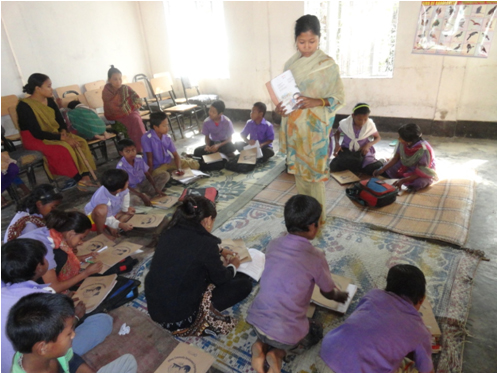
In January 2006, we implemented a pilot project of four Education Support Centers (ESCs) in two Khasi Punjee (Mokam Punjee and Jaintapur). The pilot project was developed following numerous focus group discussions and meetings with community members, using a participatory approach to design a strategy to deal with education problems. The Support Centre is open from 7am- 9am every day (except weekend days) to help children complete their homework. It is run by a locally recruited indigenous teacher.The ESCs are supported by a committee composed of local community leaders and members who oversee the running of the centers.
Following the establishment of Education Support Centers, the attendance rate among the indigenous children significantly increased. Currently 135 children attend four ESCs. Their capacity is for thirty students, but due to their success they are heavily oversubscribed. We are trying to expand the program and are searching for funding to enable us to do this. If you are interested in finding out how you may be able to support ECDO’s education work, please contact us.