The Journey of Education Support Centre (ESC) 2005
In 2005, ECDO started to establish Education Support Centre (ESC) to assist primary school enrolled children of the Khasi ethnic group. The objective of Education Support Centre (ESC) is to assist children by recruiting teachers from their own community so that they can teach students in their own mother tongue. In fact, the ESC was a comprehensive package dedicated to the advancement of education among ethnic groups. Each child under in the ESC is supported with cost free education materials so that poor parents do not need additional expenditure for education. This activity covered three villages called Noxia punjee, Songram punjee of Goainghat Upazila and Mokam punjee at Jaintapur Upazila under Sylhet administrative district. The Khasi ethnic group prefers to speak in their own language and struggle to communicate with majority people due to language barriers. Children of their community face serious problems at schools due to language barriers and that why ECDO, through its ESC recruits educated youths as teachers from the Khasi community. These teachers translate Bangla and English into Khasi language and help students preparing their lessons. Due to this intervention, children have become motivated to education and their performance at school is increased. They are attending schools regularly and drop-out rate has reduced dramatically. Parents are also motivated and now the rate of school enrollment is increased in the area. This achievement was highly appraised by the local community and concern local government education authority. The local government primary school teachers were also very happy with the support of ECDO. Several mainstream electronic and printing Medias including satellite TV Channels (ATN, RTV, ETV….) and daily newspapers covered this news as a unique, new and successful program for the advancement of education among linguistic ethnic groups in Sylhet region and focused how the same program can be replicated for the other ethno-linguistic groups in Bangladesh.
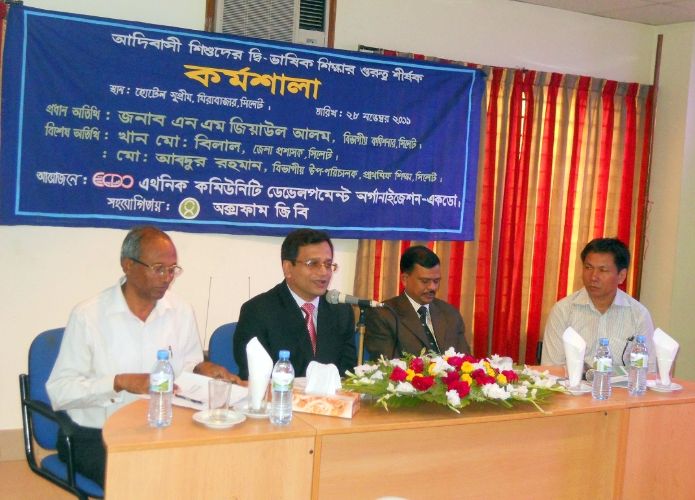
ECDO arranged series of meetings, seminars and workshops to share this innovative project and achievements to the concern government officials especially working in education sector and at policy level.
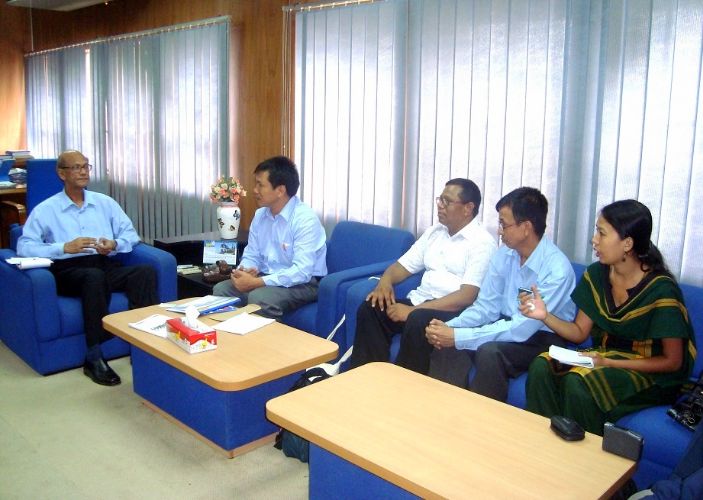
ECDO also met with the honorable Minister of the Ministry of Education and shared the success of ESC and presented the importance of introducing bi-lingual teaching and learning process at government primary schools. As recognition of the success of bilingual teaching and learning process of ECDO, two local indigenous female teachers from the Khashi community were recruited as Government Primary School Teachers by the government authority. The government of Bangladesh has recognized the importance of primary education in mother tongue and started to distribute books written in their mother tongue of the children of five ethnic groups. In first phase, students up to class two are getting this opportunity. ECDO had an active role in this context. However, none of the ethnic groups in Sylhet city get this opportunity. Currently ECDO is advocating for introducing same initiatives for the children of ethnic groups in Sylhet.