Empowering Grassroots Health Champions: ECDO and Ipas Bangladesh Train Community Volunteer Health Workers on Reproductive Health
In many parts of Sylhet, particularly in the tea garden areas and among the Patro community, access to reproductive and maternal healthcare remains limited. Tea garden workers, most of whom are women, often live in remote and underserved areas where healthcare facilities are scarce, and awareness around sexual and reproductive health and rights (SRHR) is low. Similarly, the Patro community a marginalized ethnic group in the region faces structural barriers to accessing quality healthcare, especially for women and adolescents. In such settings, the presence of trained community health volunteers can make a vital difference.
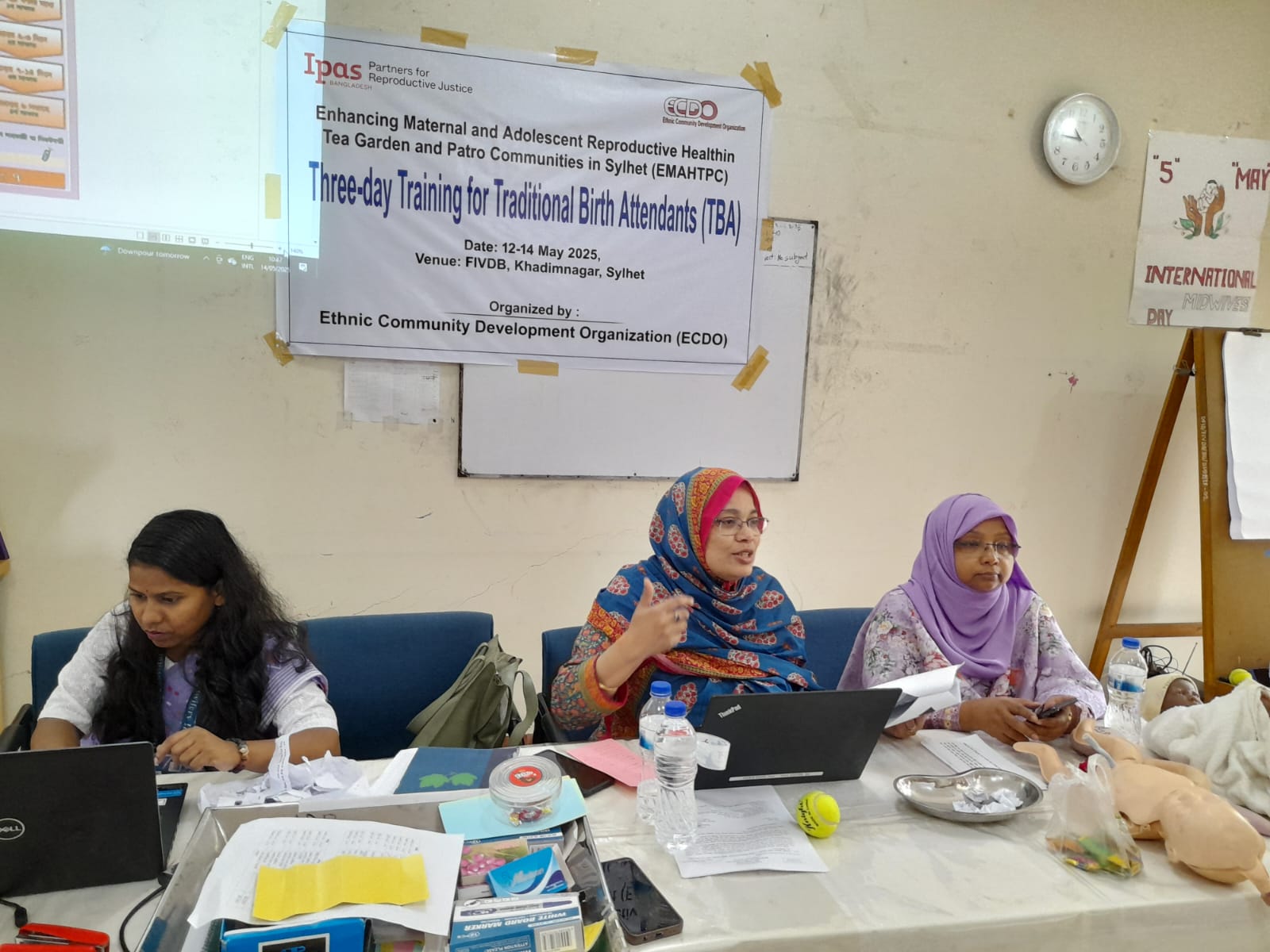
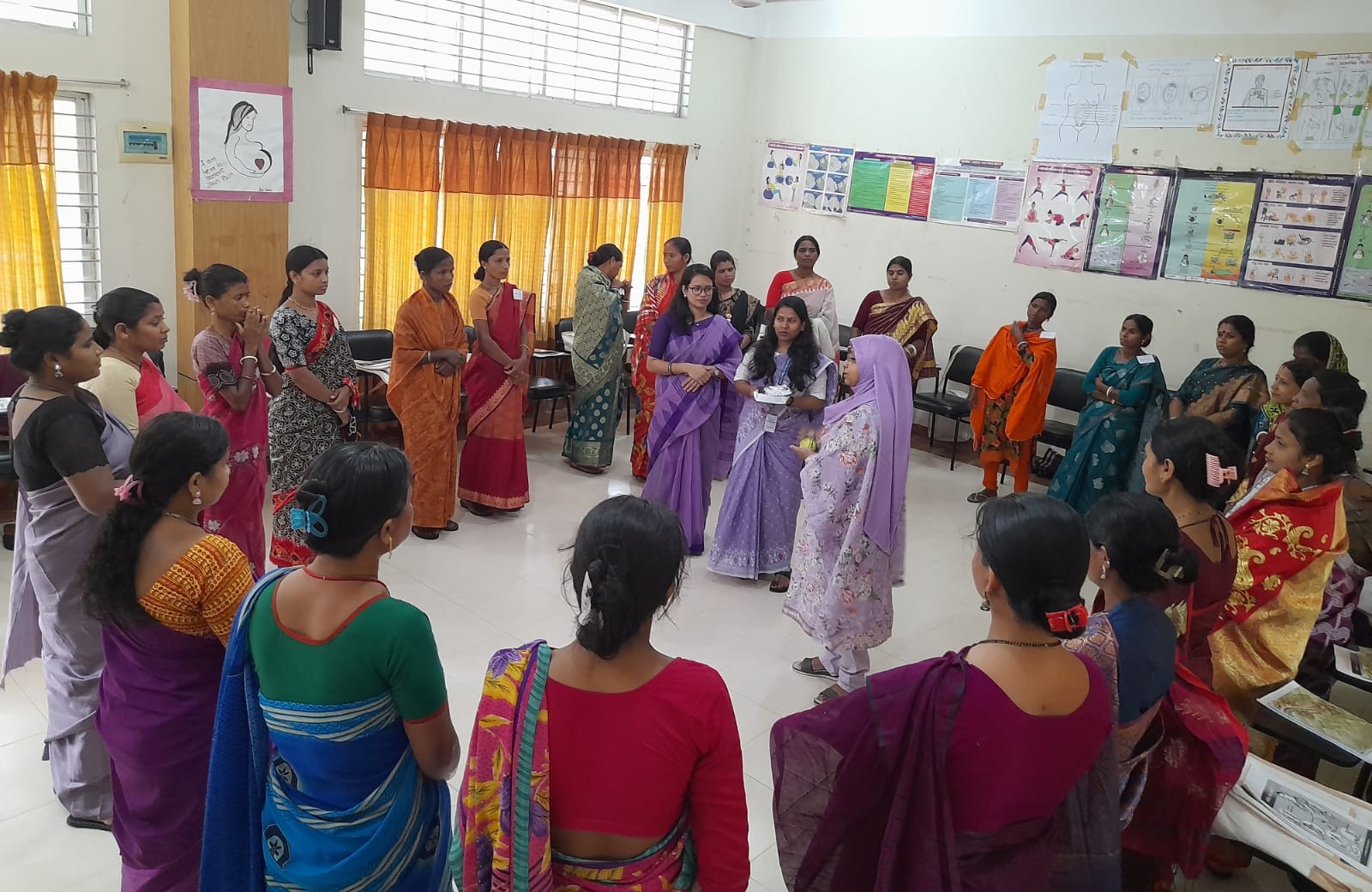
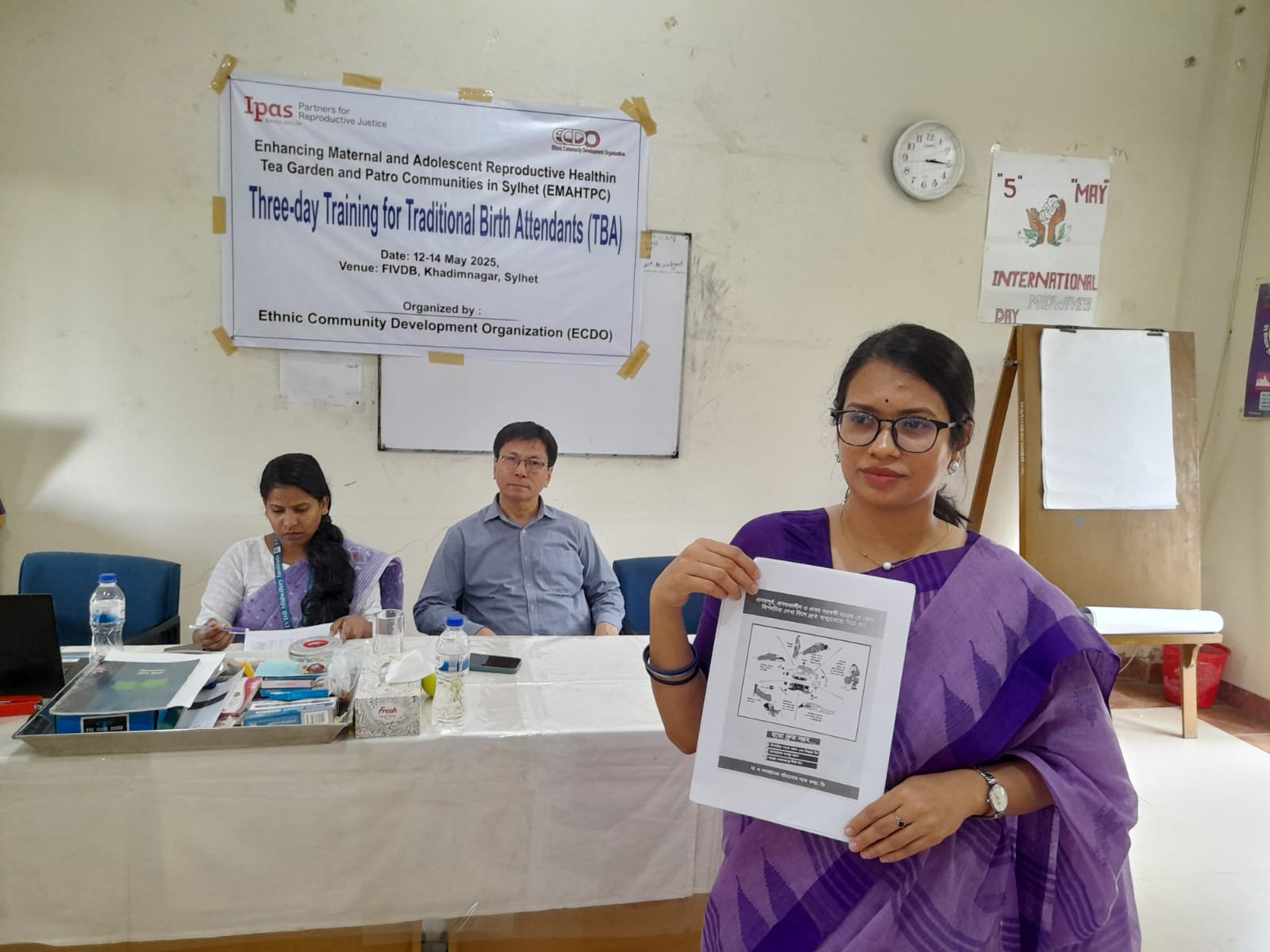
To address this gap, as part of the project “Enhancing Maternal and Adolescent Reproductive Health in Tea Garden and Patro Communities in Sylhet,” a comprehensive three-day training program for Community Volunteer Health Workers was successfully held from May 12–14, 2025, at Midwifery Training Institute of FIVDB Khadimnagar, Sylhet. This initiative, implemented by Ethnic Community Development Organization (ECDO) and generously supported by Ipas Bangladesh, aimed to build the capacity of 25 women from the tea garden and Patro communities.
The training focused on Sexual and Reproductive Health and Rights (SRHR), Menstrual Regulation (MR), and modern family planning methods. These topics are critical in improving maternal and adolescent health outcomes in marginalized communities where access to accurate health information is often limited.
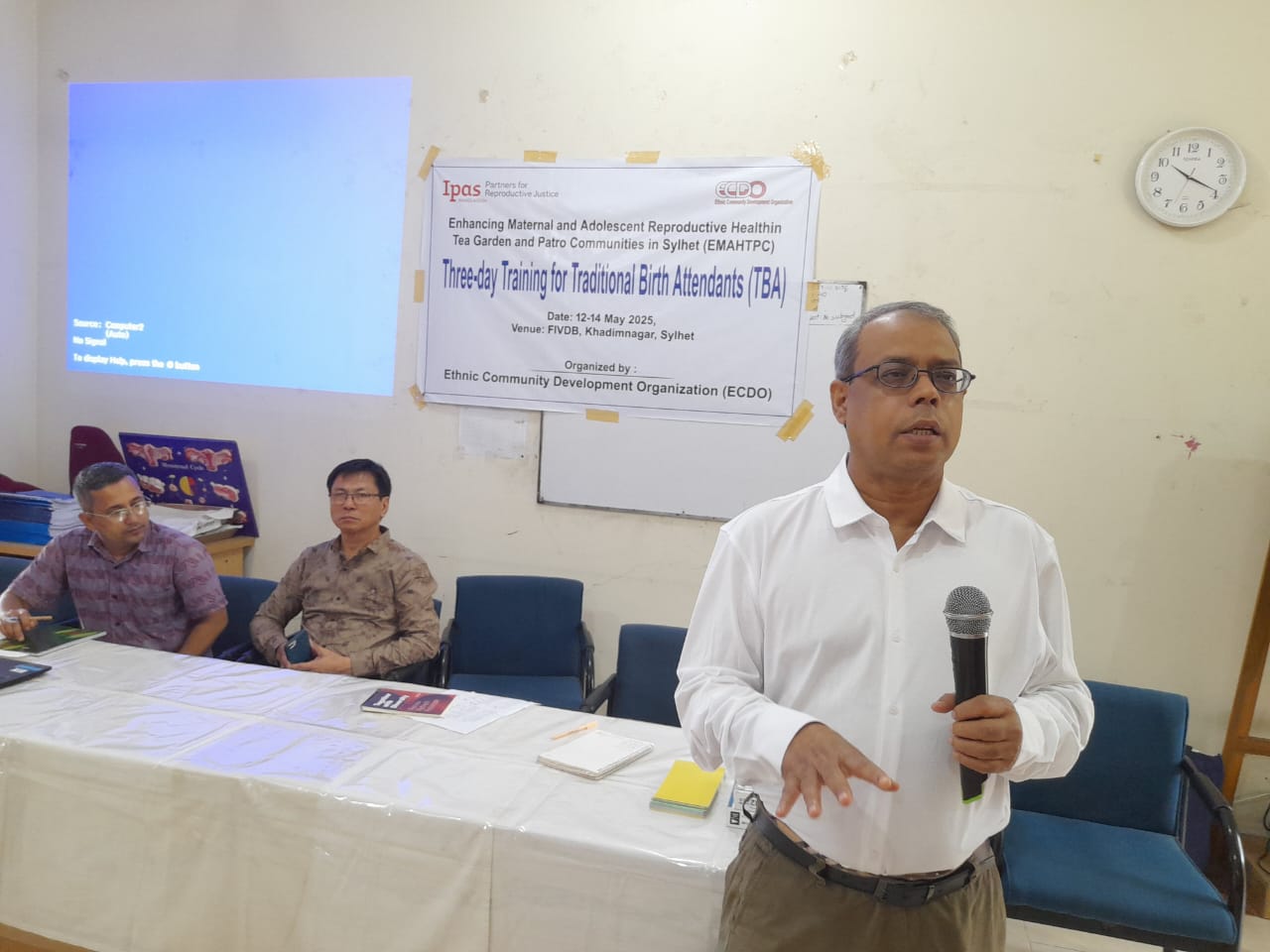
The event commenced with a warm welcome from Mr. Lakshmikanta Singh, Executive Director of ECDO. The opening session was graced by Dr. Sayed Rubayet, Country Director of Ipas Bangladesh, who attended as the Chief Guest and shared his inspiring remarks.
Expert-led sessions were conducted by Dr. Rubana Rashid and Dr. Wahida Siraz from Ipas Bangladesh. They were joined by trainers Kona Nath Roy and Pronamika Tati of FIVDB, who helped facilitate in-depth discussions on key reproductive health issues. Topics covered included the female reproductive system and menstrual cycle, MR, family planning methods, antenatal care (ANC), essential newborn care, postnatal care (PNC), normal vaginal delivery, complications during delivery, and referral mechanisms.
The participants many of whom had no prior formal training showed remarkable enthusiasm and commitment. Their active involvement and eagerness to learn highlighted both the need and the potential for community-led health initiatives. As the training concluded, many of the women expressed a strong desire to apply what they had learned to serve their own communities, becoming a bridge between formal healthcare services and the people who often fall through the cracks.Throughout the training, participants actively engaged in interactive discussions and shared their own experiences. Many expressed gratitude for the opportunity to learn and committed to sharing this knowledge within their communities to promote better health practices.
The closing session featured an encouraging speech by Mr. Lakshmikanta Singh, who urged the newly trained health workers to act as catalysts for positive change. He emphasized their vital role in improving the well-being of women and girls in their communities.
This initiative marks a significant step toward building a network of informed, empowered community health volunteers capable of addressing reproductive health challenges in underserved regions