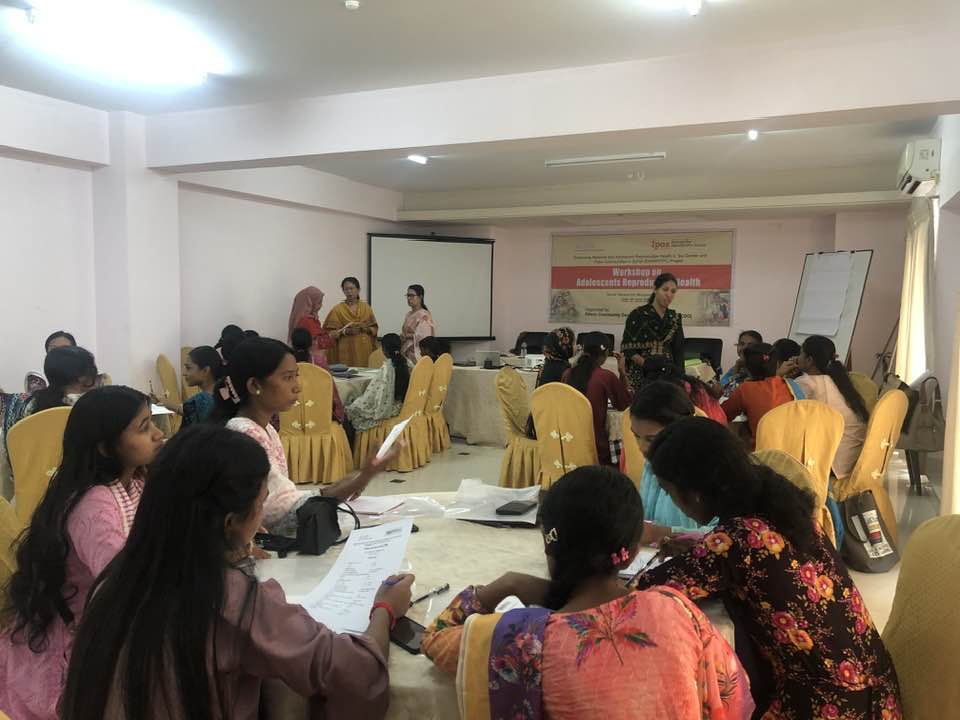
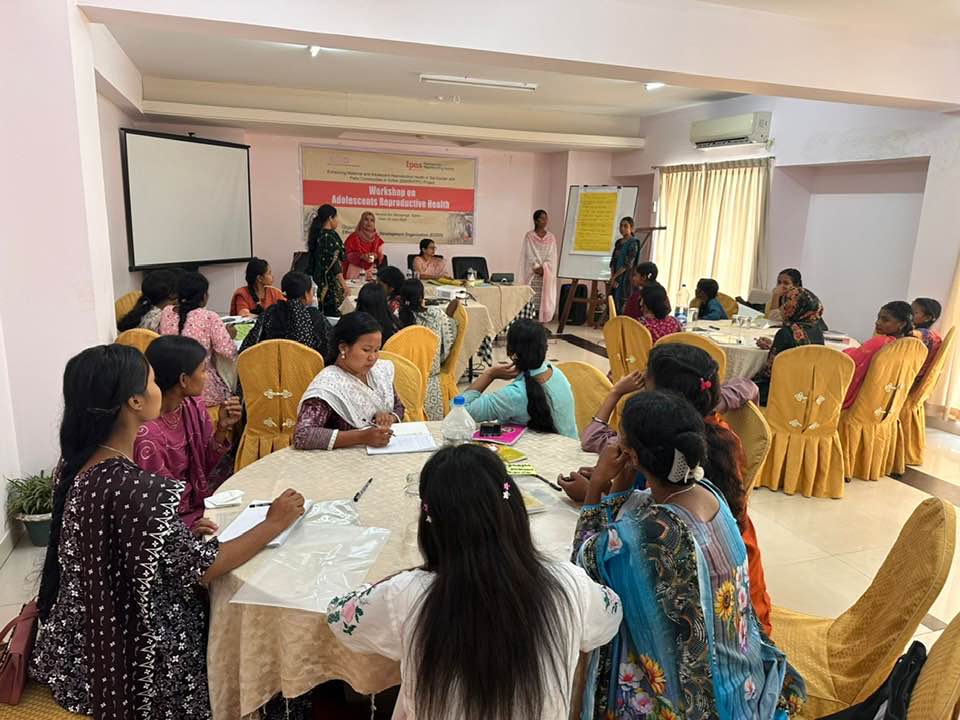
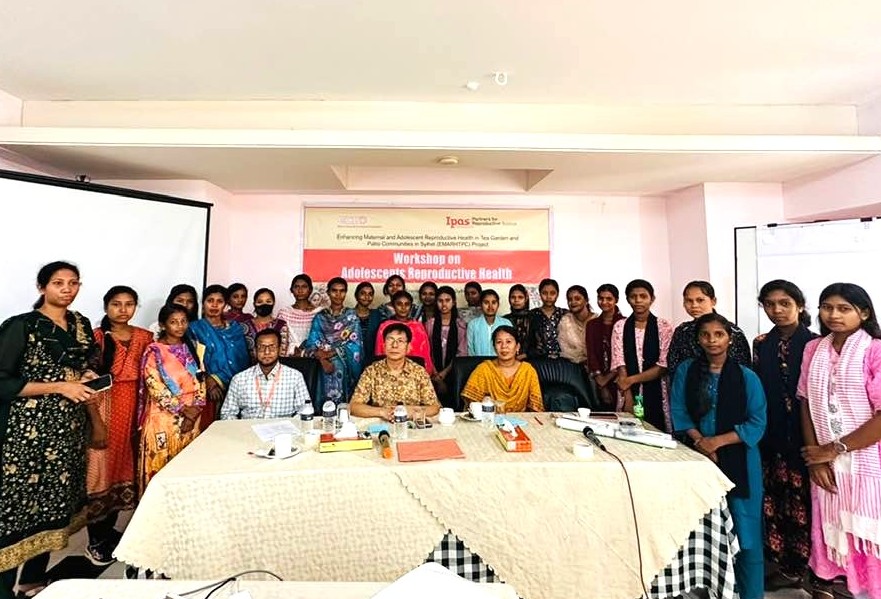
ECDO organized a significant day-long workshop on Reproductive Health and Sexual and Reproductive Health and Rights (SRHR) aimed at empowering adolescent girls from marginalized communities. In Sylhet region, tea garden and Patro communities, remains geographically isolated and socio-economically disadvantaged, with limited access to formal healthcare services. In response to these challenges, Ipas Bangladesh has initiated efforts to improve maternal and adolescent SRHR in these areas. The workshop, organized by ECDO supported by Ipas Bangladesh, marks a vital step in this initiative.
Held in a hotel conference room in Sylhet city, the workshop brought together 25 adolescent girls 20 from the tea garden community and 5 from the Patro community all of whom are current school and college students. The sessions covered essential topics relevant to adolescent well-being, including physical and emotional changes during adolescence, understanding gender concepts, the dangers of child marriage, gender-based violence and its consequences, and the importance of proper nutrition. These interactive and informative sessions were conducted by two experienced female external resource persons who ensured active engagement and participation from the attendees.
The event was inaugurated by Mr. Lakshmikanta Singh, Executive Director of ECDO, who encouraged the participants to share the knowledge they gained with their families and apply it in their daily lives. He also mentioned ECDO’s future plans to provide skill development training for adolescent groups to further support their personal and social growth.
The workshop was also attended by key guests including Mr. Borhan Mridha, representative from Ipas Bangladesh, Ms. Nongpoklai Sinha, Project Manager of ECDO and Ms. Shirly Tranbul, Programme Team Member from ECDO. This workshop stands out as a initiative focused on reproductive health and SRHR tailored specifically for adolescent girls in the tea garden and Patro communities. It represents a meaningful step toward breaking the barriers of marginalization and creating informed, confident, and empowered young women who are aware of their health and rights.