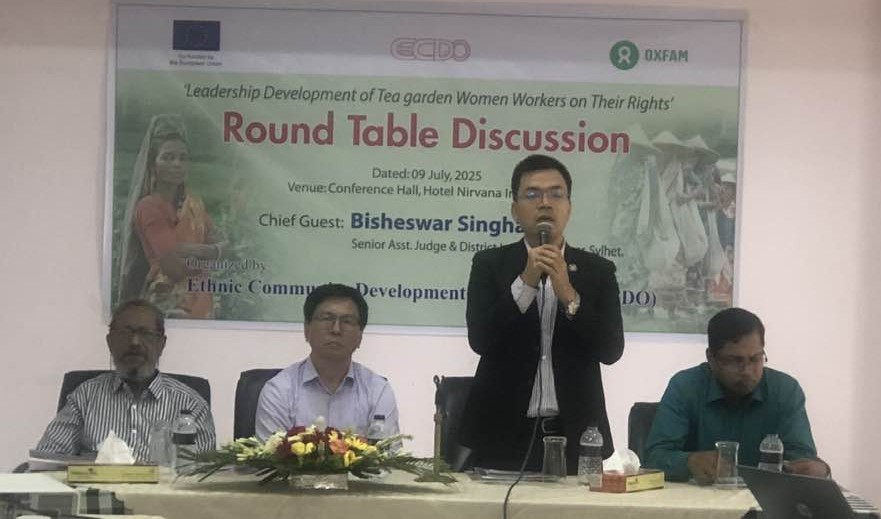
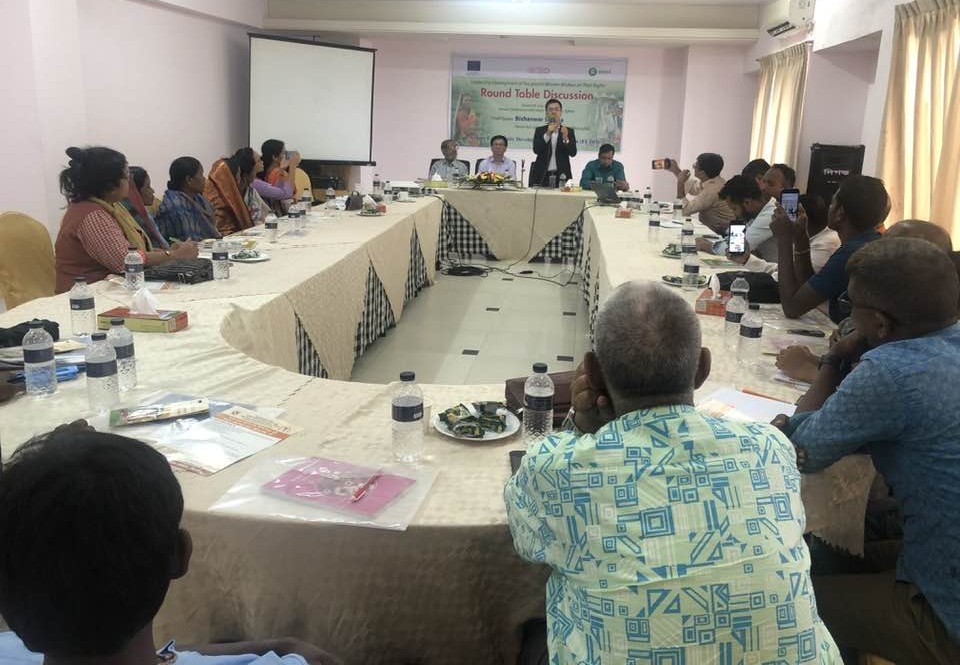
On July 9, 2025, the Ethnic Community Development Organization (ECDO) successfully organized a significant Round Table Discussion in Sylhet, aimed at addressing the pressing rights and challenges faced by tea labor community. ECDO organized the event under the project titled “Leadership Development of Tea Garden Women Workers on Their Rights.” supported by Oxfam in Bangladesh & co-funded by European Union. The project’s backing ensured that the discussion was not only a platform for dialogue but also a catalyst for ongoing leadership development and advocacy efforts within the tea labor community. The event was chaired by Mr. Lakshmikanta Singh, Executive Director of ECDO where Mr. Bisheswar Singha, Senior Assistant Judge and District Legal Aid Officer of Sylhet, presented as the Chief Guest.His presence lent the discussion a strong legal and institutional perspective, underscoring the importance of justice and legal rights for tea workers
The Round Table also welcomed several distinguished special guests, including Mr. Anwar Hossan, Manager of Lackatoorah Tea Estate, and Mr. Faruque Mahmud Chowdhury, President of SUJON, Sylhet. Their participation highlighted the collaborative spirit needed between management, community leaders, and civil society to address the multifaceted challenges within tea estates. The event attracted a diverse and representative group of stakeholders, bringing together tea labor union representatives, Panchayets, tea garden authorities, human rights activists, and various non-governmental organizations. This broad representation ensured that multiple viewpoints were heard, fostering a rich and meaningful dialogue around the social, economic, and legal issues faced by tea garden workers.
A particular emphasis was placed on the conditions and rights of women workers, specific concerns were raised about the lack of adequate drinking water and proper washroom facilities in that directly affect the health, dignity, and overall well-being of women tea-workers. Participants stressed the urgent need to improve the workplace environment to ensure basic rights and humane conditions for all workers. The dialogue moved beyond simply identifying these challenges and focused on actionable steps to bring about lasting, positive change. Among the key recommendations were the construction of safe and hygienic washroom facilities and the provision of sufficient, safe drinking water measures seen as essential to supporting the health, safety, and empowerment of women workers
Overall, the Round Table Discussion marked an important step in advancing the rights and welfare of tea garden women workers in Sylhet, fostering collaboration among diverse stakeholders committed to driving positive social change.