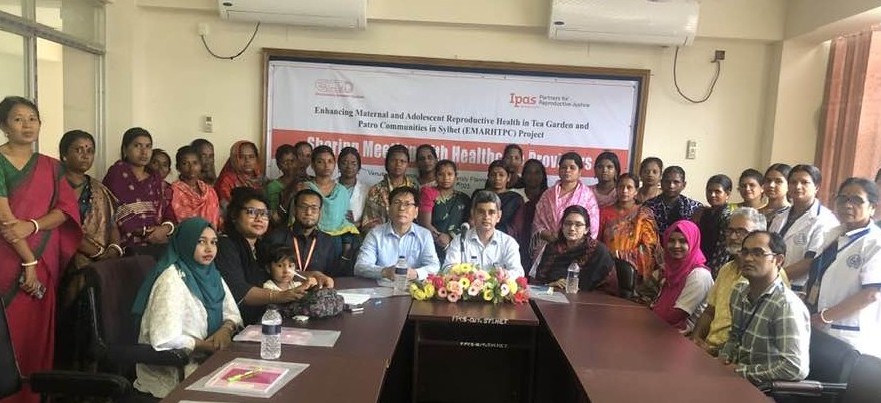
Sharing meeting with health care provider
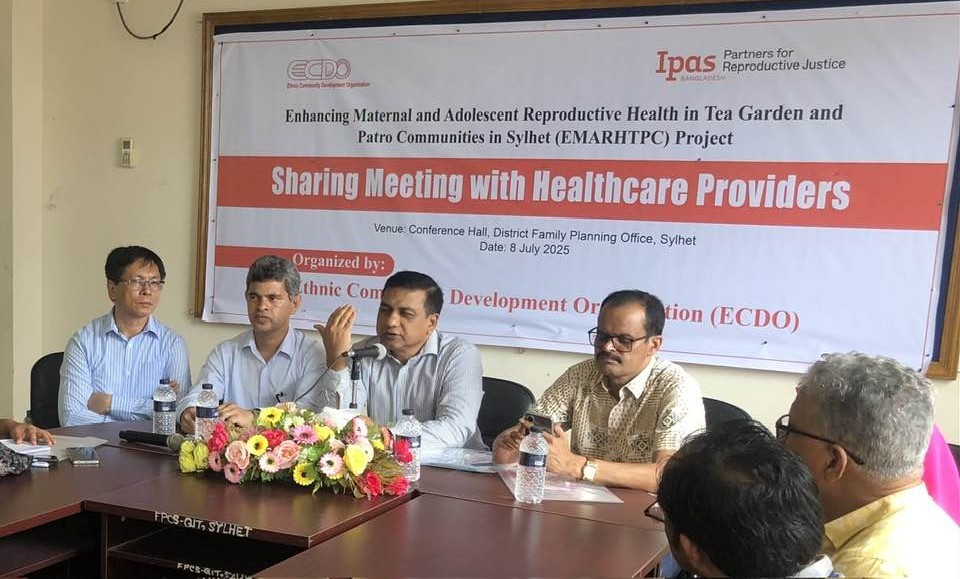
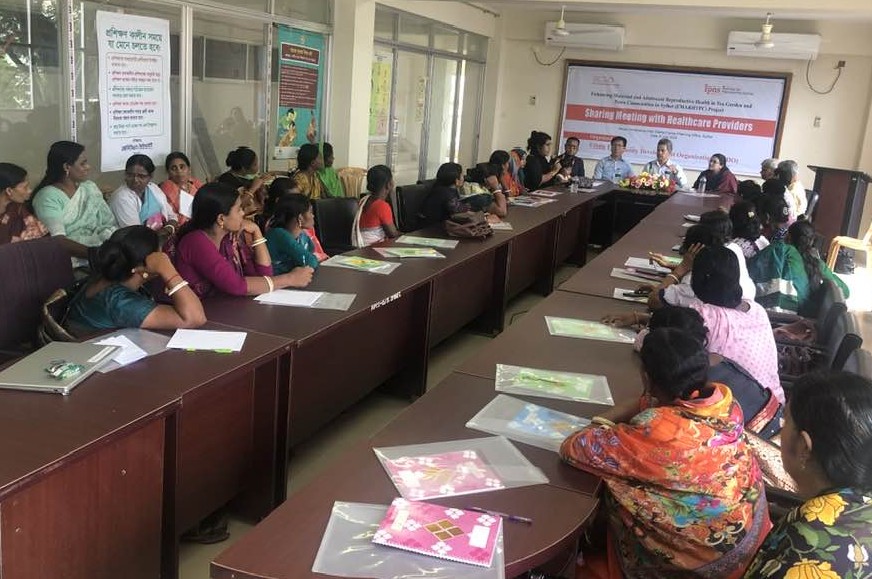
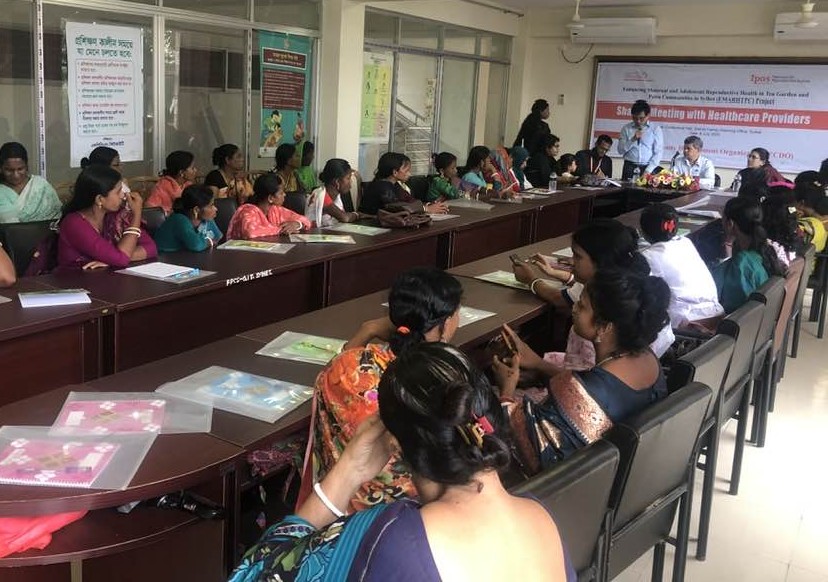
On Wednesday, July 8, Ethnic Community Development Organization (ECDO) organized a sharing meeting focusing on maternal and adolescent reproductive health services in the conference room of the District Family Planning Office in Sylhet city. The meeting brought together trained community health workers from the tea gardens and the Patra community of Sylhet, along with representatives from various family planning sectors operating in the region. ECDO organized the event under the project “Enhancing Maternal and Adolescent Reproductive Health in Tea-Garden and Patro Communities in Sylhet” (EMARHTPC), supported by Ipas Bangladesh, which aimed to foster collaboration and coordination among stakeholders to improve healthcare access for marginalized communities specifically tea-garden and Patro communities of Sylhet Region.
The meeting highlighted the pressing need for healthcare among female tea workers, who often remain excluded from basic medical services. ECDO informed attendees that, with support from Ipas Bangladesh, they have trained 25 women from the tea gardens and Patro community of Tukerbazar and Khadimnagar unions to address these healthcare gaps. These trained women are now playing a crucial role in raising awareness about maternal health, family planning methods, and prenatal services within their communities. The meeting served as a platform to link these grassroots efforts with the formal health system, particularly with field-level family planning workers.
During the discussion, several voices from the community shared their experiences and concerns. Shayanmoni Goala, the midwife in charge of Kewachera and Doldoli tea gardens, claimed that women from the tea gardens do not seek prenatal care. In response, Geeta Munda from Doldoli tea garden challenged this claim, stating that she had never seen the midwife visit the garden and had only now learned of her existence. Similarly, Priti Das Deepa from Kewachera expressed surprise at the presence of a medical facility near their garden, noting that many women, like her, were unaware of available government health services. She credited ECDO’s training for educating her and enabling her to guide other women in her community toward necessary healthcare.
The meeting also addressed systemic challenges in providing services to tea garden communities. Representatives from the family planning sector pointed out a severe shortage of manpower, with only three health workers assigned to 11 tea gardens far below the required 22. They emphasized the urgent need for better coordination between government and private sectors to overcome logistical constraints and ensure that healthcare reaches the underserved populations effectively.
Md. Niazur Rahman, Deputy Director of Sylhet District Family Planning, attended the meeting as the chief guest and assured participants of the government’s commitment to delivering free family planning and maternal healthcare to all. He acknowledged the existing gaps and credited ECDO for building a vital bridge between the government and the communities. He affirmed, “Today you are coming to us here, then I will go to you,” reinforcing the intention to take concrete actions based on the day’s discussions.
Mr.Lakshmikanta Singh, Executive Director of ECDO presided over the meeting and reiterated the importance of reproductive healthcare for tea garden and Patro communities. He emphasized the need for awareness and capacity-building initiatives, explaining that the training provided to local women aims to empower them to lead change from within their communities. The event also featured insights and responses from Mr. Biswajit Krishna Chakraborty, Assistant Director of District Family Planning office, Dr. Suborna Roy Tuli from Sylhet Sadar Upazila MOMCH, Md. Borhan Mridha, Deputy project Manager, Ipas Bangladesh and Abul Mansur Asjad, Family Planning Officer, Sylhet Sadar Upazila
In summary, the sharing meeting marked an important step toward collaborative action in addressing maternal and adolescent health disparities in Sylhet’s tea gardens and Patro communities. It brought to light critical gaps in service delivery while showcasing the positive impact of grassroots training and community engagement. For ECDO, this initiative is not just a project achievement but a vital part of its mission to ensure health equity and dignity for marginalized ethnic communities through sustained advocacy, empowerment, and meaningful collaboration.